


When selecting a stretch film for shipping, purchasing managers often focus on the cost per roll. This is a mistake because it can result in waste and damage to loads. Proper packaging and wrapping are essential for the safe transportation and delivery of shipments. If a load is not properly wrapped, the recipient may refuse delivery of the shipment, which can lead to a high cost-per-load. The weight of a pallet can range from 1000 to over 2000 lbs.
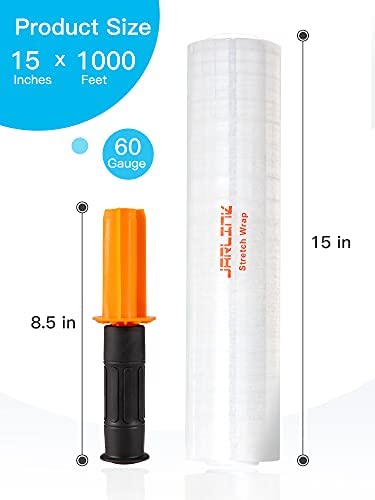
In selecting the right stretch film, you must understand the shipping cycle. If you're shipping a load across town, a different gauge than a shipment going across the Rocky Mountains. The more stops and starts, the more movement and jostling will occur. A lower gauge stretch film will be less prone to damage. However, a higher gauge film will be a good choice if you're shipping a large load.
While it is best to use the highest-gauge film for a stable load, lower-gauge films tend to provide a stronger and more durable product. Higher-gauge films also have higher yields and lower overall costs, but they don't have the same durability as lower-gauge films. A higher gauge film requires more revolutions, but its higher holding capacity reduces overall costs. A higher-gauge film is recommended for load security and stability, and will not void your warranty.
To determine the proper size stretch film for your needs, you should take into consideration the type of shipping cycle. A short shipment across town will be shorter than a long one across the Rocky Mountains. Similarly, a load traveling across the country will experience more stops and starts. This means that the load will have more movement and jostling, which will lead to higher holding power and less holding force. For these reasons, you should always consider the length of your shipment and gauge.
Another important question to ask is what gauge stretch film size should I use? The gauge of a stretch film is an important factor to consider when packaging a load. The lower gauge is generally better suited for heavier loads. It is also more durable than lower-gauge films. The higher-gauge ones are recommended for smaller loads. A high-gauge stretch film can be used for more delicate loads. If you're using a lower-gauge material, you should consider a heavier-gauge option.
When choosing stretch film for your shipment, you need to consider the shipping cycle. You should consider the length and width of the load. If the load is smaller than two meters, choose a heavier-gauge film. The higher-gauge ones are ideal for larger diameter loads. In addition to the weight, you should consider the diameter and the length of the shipment. Further, you should consider the type of film.
Before choosing a stretch film, you should understand the entire shipping cycle. A local shipment will have a different length than a load traveling across the Rocky Mountains. It will also experience more stops and starts and more movement. The gauge of the stretch film is the main factor in determining the capacity of the film. You can check the size of your stretch film with a gauge conversion chart. You can also check the technical data for a stretch wrap on the internet.
When choosing a stretch film size, you need to consider its gauge. A pre-stretch film has been mechanically stretched prior to being rolled. Its thickness will be thinner than a true-gauge one. Nonetheless, both types of stretch films will work well for your shipment. If you're unsure, you should talk to a sales representative to get more information. When you have found the right stretch film, you can choose a film that will help you ship your goods safely.
There are two kinds of stretch films. You can use either pre-stretch or engineered film for shipping. Both have the same purpose: to protect a load during shipping. Machine-grade stretch film is thicker than hand-grade films but has a higher strength. It's ideal for larger-diameter loads. A 47-gauge film has the same retention power as a 60-gauge one.


 Telephone :0086 19516523987
 WhatsApp :+86 19516523987
 Email :



 +86 19516523987
 0086 19516523987