


PVC (polyvinyl chloride) cling film contains carcinogens, which are harmful to the human body. In Japan and South Korea, it has recently been found that certain brands of cling film contain these substances. This has caused the relevant departments to focus on the issue and look into other alternatives. The same reporter also visited Xi'an, China, and found that most of the household food wraps sold there are made of PE (polyethylene).
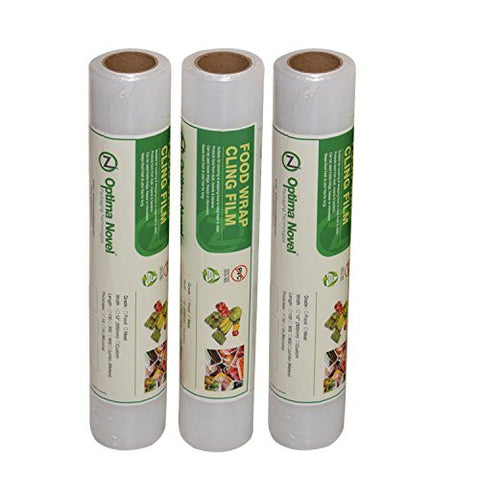
Although non-PVC cling film is better for use with food, it cannot be used in the microwave or in the oven, and should not be exposed to direct heat. Unlike non-PVC wrap, PVC food film is biodegradable, so it is a better option. It is also safer for direct cooking and reheating. However, it is important to note that PVC food wrap can become hot when exposed to direct heat.
A common substitute for PVC is low-density polyethylene (LDPE). LDPE is less clingy than PVC but does not contain any potentially toxic additives. LDPE films can also be made with newer production methods, such as linear low-density polyethylene (LLDPE). This film is more pliable and has a higher tensile strength than its PVC counterpart. LDPE is a popular choice in food wrap, and Saran Premium Wrap is a good example of one of these types.
The difference between PVC food film and non-PVC food wrap is in the way they're made. Both are clung film, but non-PVC is more biodegradable and suitable for 95% of food preparation. When using both, it is recommended to keep the film a few centimeters away from the food it's covering.
A non-PVC food wrap is made of plastic that is biodegradable. It is also safe to use in the microwave, but be sure to keep it away from high-fat foods. Both types of film are biodegradable. You can choose the type that suits your needs best. For the most part, PVC food wrap is biodegradable and safe for use on 95% of foods.
The first type of film is called stretch film. This is a kind of plastic that was invented for storing and transporting food. A non-PVC film, on the other hand, is not a stretch film. Instead, it is made of low-density polyethylene. Its clinginess is less than half that of PVC. But the main difference between the two types is the price. As a result, Non-PVC wrap is much cheaper.
Both types of stretch film are made of the same material: Polyvinyl chloride. In contrast, Non-PVC film is made of low-density polyethylene. Both types of films are safe, as they are free of PVC-mimicking chemicals. For this reason, it is preferred by many consumers over PVC. This is because it is more environmentally friendly.
The most important difference between PVC and non-PVC food film is their composition. While PVC film is made of polyvinyl chloride (PVC), Non-PVC film is made of low-density polyethylene or LDP. In addition, it is considered cling-film when compared to Non-PVC wrap. For instance, a higher-density polyethylene food wrap contains less BPA.
While PVC is the original material used for stretch film, Non-PVC film is made of Low-density polyethylene. These films are both made of polyethylene and are both safe for the environment. Despite their similarities, both types of film are made of different plastics. Nevertheless, PVC film is the most commonly used in commercial food packaging. While it is safe for microwaves, it should not be used in the microwave.
In addition to its quality, the non-PVC version of cling film is better for the environment and safer for your health. In comparison, the non-PVC film is not as flexible as the PVC one. Similarly, LDPE film is more affordable but does not have the same protection against heat. When heated, non-PVC cling film is not recommended for the same reason as PVC.


 Telephone :0086 19516523987
 WhatsApp :+86 19516523987
 Email :

 +86 19516523987
 0086 19516523987